In digital operations, data is often treated as a certainty—a clean stream of insights that fuels ROI, customer acquisition strategies, and product development. However, beneath the surface, the traditional infrastructure used to collect this data is facing unprecedented disruption. As browser privacy features tighten and data regulations evolve, organizations relying on legacy tracking methods risk losing critical business visibility.
The Vulnerability of Traditional Client-Side Tracking
Historically, digital analytics has relied heavily on client-side tracking. In this model, when a user visits a website, their web browser is forced to download, process, and execute dozens of third-party tracking scripts from external vendors. The browser does all the heavy lifting—gathering user behavior data and shipping it directly to various marketing and analytics platforms.
Today, this approach introduces three critical business risks:
- Degraded Website Performance: Every tracking script executed in a user's browser acts as a performance tax. These heavy JavaScript files slow down page load speeds, which directly damages user experience, lowers conversion rates, and negatively impacts organic search engine visibility.
- Loss of Data Continuity: Modern browser privacy mechanisms (such as Apple's Intelligent Tracking Prevention) aggressively restrict or delete client-side cookies—often within 24 hours. This fragmentation makes it difficult to accurately measure returning customer behavior or understand long-term customer journeys.
- Security and Compliance Vulnerabilities: Allowing third-party scripts to execute freely inside the user's browser creates data leakage risks. Organizations lose granular control over what specific data points are intercepted, creating potential compliance liabilities under modern data protection frameworks.
The Solution: Server-Side GTM as an Enterprise Proxy
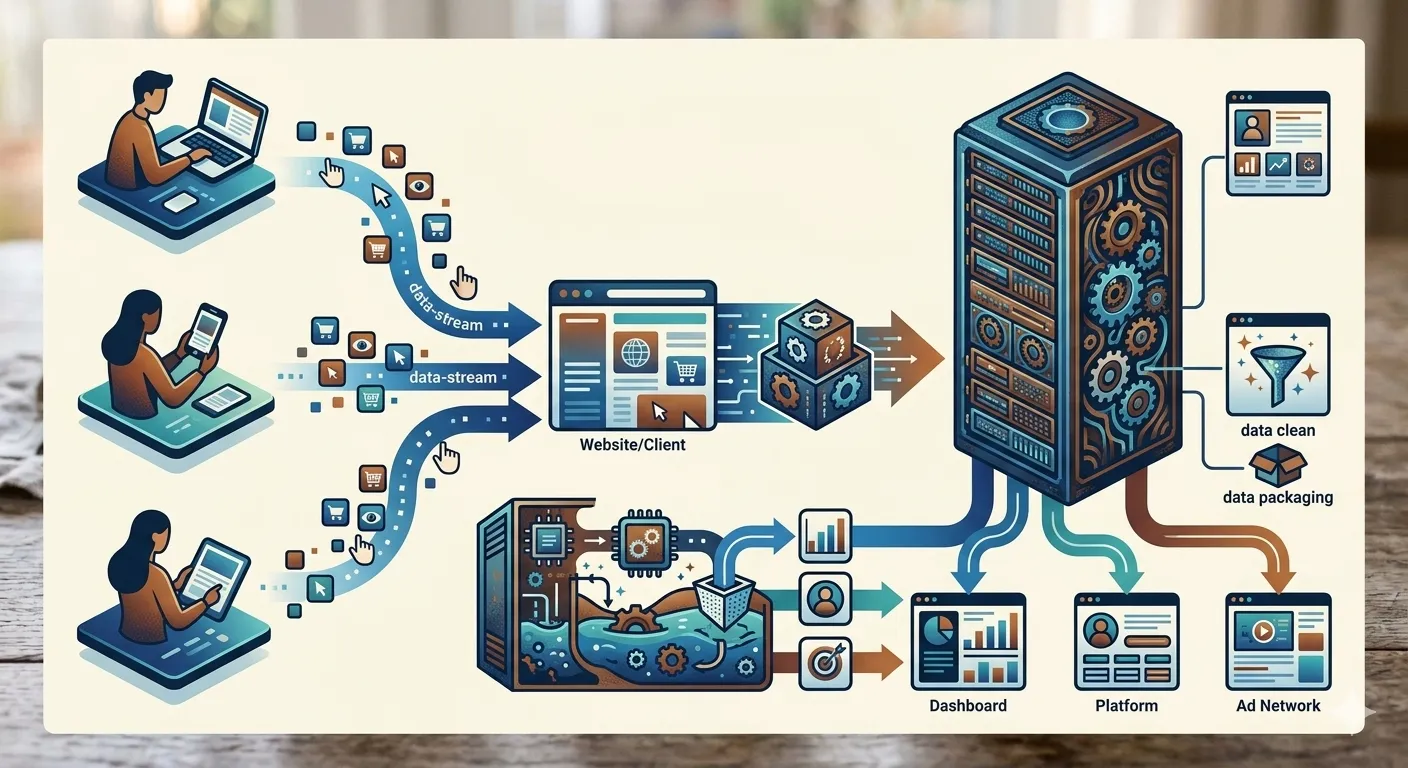
Transitioning to Server-Side Google Tag Manager (sGTM) fundamentally re-architects how digital telemetry is handled. Instead of forcing the user’s browser to communicate with multiple external vendors simultaneously, the browser sends a single, streamlined data stream to a secure cloud server instance controlled entirely by your organization.
Acting as a centralized proxy, the server processes, cleanses, and enriches this data before routing it to external endpoints. This architecture delivers three core advantages:
1. Enhanced Security and Data Sovereignty
With sGTM, your organization owns the data pipeline. You gain total control over what information is shared with third parties. Sensitive data points—such as internal profit margins, customer database IDs, or secret API keys—remain securely contained within your cloud environment rather than being exposed to the public-facing browser.
2. Measurable Performance Optimization
By stripping out bloated third-party tracking code and replacing it with a single server request, you reduce the processing burden on the user's device. Faster page load times create a frictionless user experience, lowering abandonment rates and safeguarding digital revenue streams.
3. Resilience Against Browser Restrictions
Because sGTM operates from a subdomain mapped to your primary web domain, the cookies it issues are classified as true first-party cookies. These are recognized as legitimate by modern browsers, restoring the integrity of your attribution models and ensuring reliable business intelligence.
The Technical Roadmap: Ensuring Quality Ingestion
Maximizing the return on a server-side deployment requires a disciplined approach to data governance. Before routing data to downstream analytics endpoints, technical teams must prioritize two foundational pillars:
- Normalizing the Data Layer: Establishing a standardized, vendor-agnostic data layer ensures that website events (such as a completed transaction) are captured uniformly. The server can then effortlessly translate this single event into the specific formats required by various external platforms, eliminating redundant tracking code.
- Rigorous Tag Health Checks: Digital environments are dynamic. Implementing continuous monitoring and automated health checks ensures that pipeline anomalies, broken tags, or data discrepancies are identified and resolved in real time, preventing strategic decisions from being made based on corrupted telemetry.
Conclusion
Adopting Server-Side Google Tag Manager is a proactive risk-mitigation and performance strategy. By shifting data collection away from the unpredictable client-side environment and into a controlled server-side architecture, organizations protect proprietary assets, optimize the digital user experience, and secure the high-fidelity data necessary to drive long-term growth.